Aleph Zero Native DEX
Independent community presentation by EV 0X.

Native Exchange.
Connected Assets.
One Settlement Layer.

A native exchange changes the role Aleph Zero can play.
With a limit-order-book DEX on Layer 1 and bridges connecting other blockchain networks, Aleph Zero could become a common trading venue for assets and liquidity arriving from across the blockchain economy.

The exchange provides the meeting point. The bridges provide the reach. Aleph Zero provides the settlement layer.
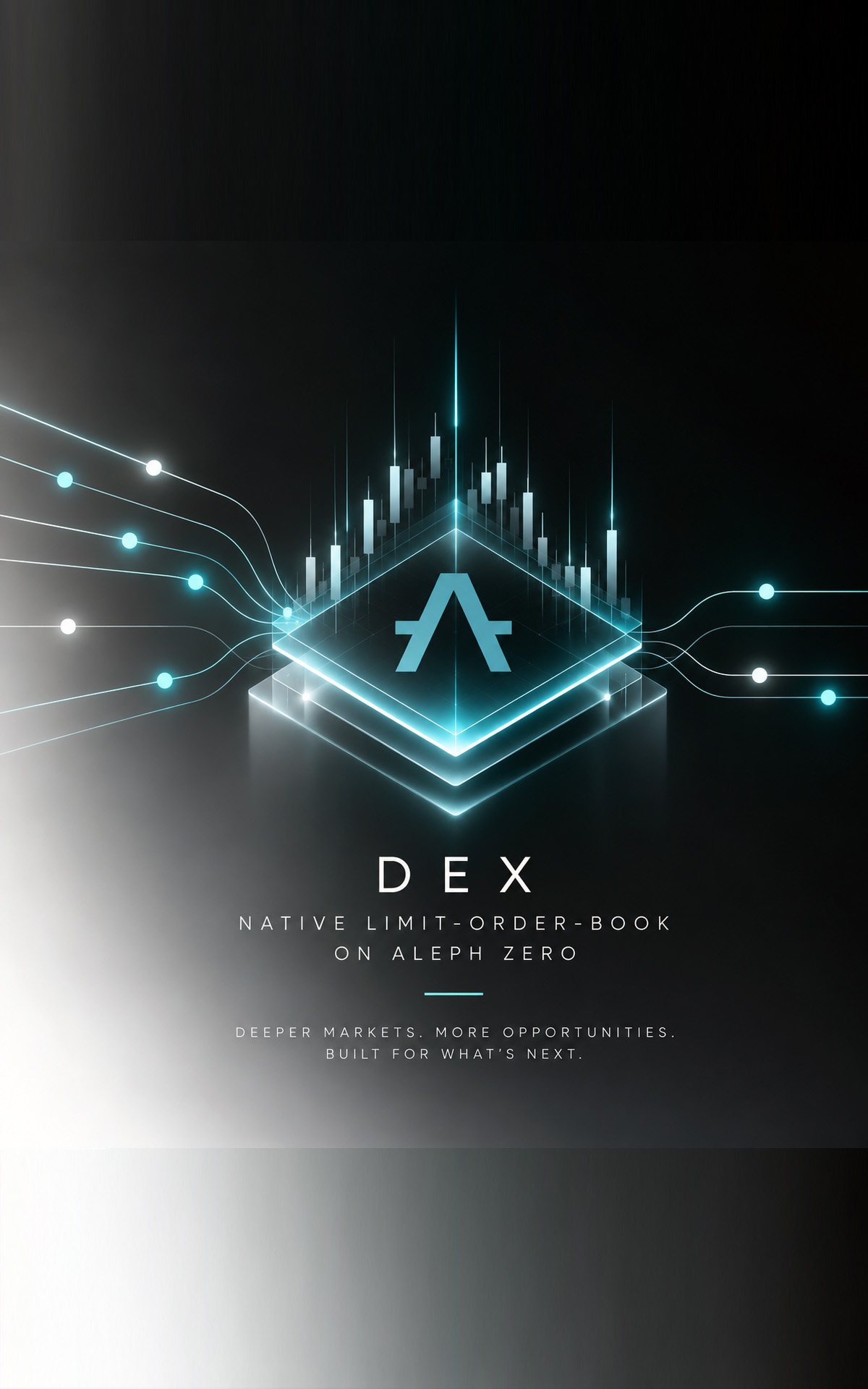
Native
Limit-order-book DEX
A limit-order-book exchange is proposed directly on Aleph Zero L1.
Proof-Connected
Cross-chain assets
ZKBridge is being explored to connect Aleph Zero with other programmable chains.
BitVM
Bitcoin pathway
BitVM is being explored as the bridge route between Bitcoin and Aleph Zero.
Aleph Zero native limit-order-book DEX
Planned

An exchange built for the Aleph Zero L1.

The XRP Ledger provides a useful conceptual analogy: exchange is a native capability of the network.
Assets on XRPL can be traded through an exchange built directly into the ledger, without requiring a separate DEX application to provide the trading system.

Aleph Zero’s roadmap similarly places a limit-order-book DEX directly on its Layer 1.
This gives Aleph Zero its own exchange infrastructure, while the planned bridges extend its reach to assets and liquidity across other blockchain networks.
A DEX on the L1The proposed exchange would run directly on Aleph Zero L1,
where orders, trades and settlement are processed.
A limit-order bookTraders can state the price at which they want to buy or sell.
Compatible orders can then be matched.
Built for a wider marketThe exchange becomes more significant when bridges connect it with assets and users from other blockchain networks.
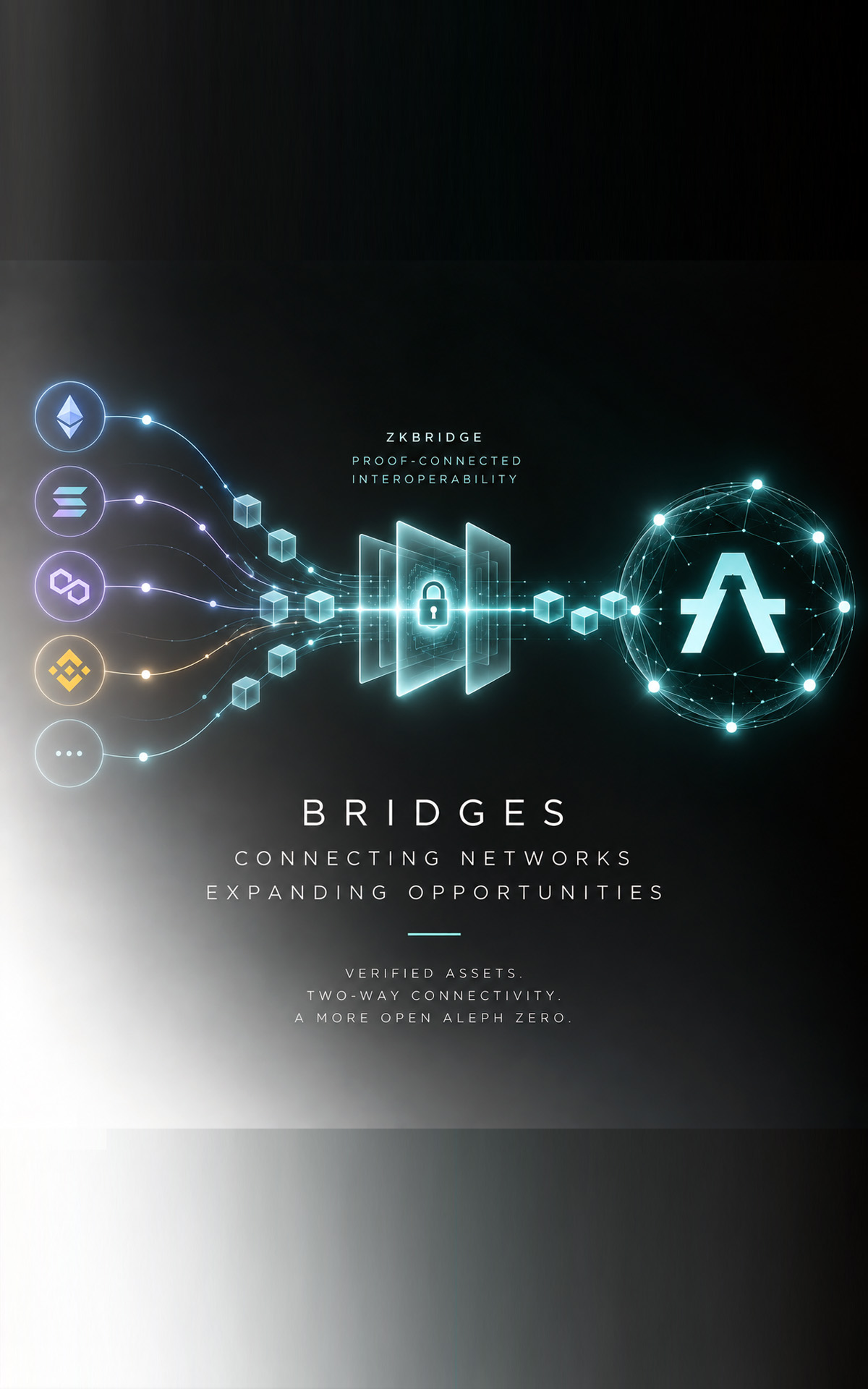
ZKBridge proof-connected interoperability
Exploring

The bridges turn the DEX into a cross-chain opportunity.

Aleph Zero plans to connect its Layer 1 with other blockchains through bridges designed around cryptographic verification.
For programmable chains such as Ethereum, the roadmap explores ZKBridge.

These connections are intended to let assets move between chains, giving the Aleph Zero DEX access to markets that extend beyond the Aleph Zero ecosystem.
Proof-based verificationZKBridge is designed to prove the state of another blockchain
so Aleph Zero can verify the information needed for a transfer.
Two-way connectivityThe roadmap proposes two-way bridges between Aleph Zero and compatible chains, allowing assets to move in either direction.
A direct route to the DEXOnce a supported asset has been bridged to Aleph Zero, it can potentially be traded
through the native limit-order-book exchange.
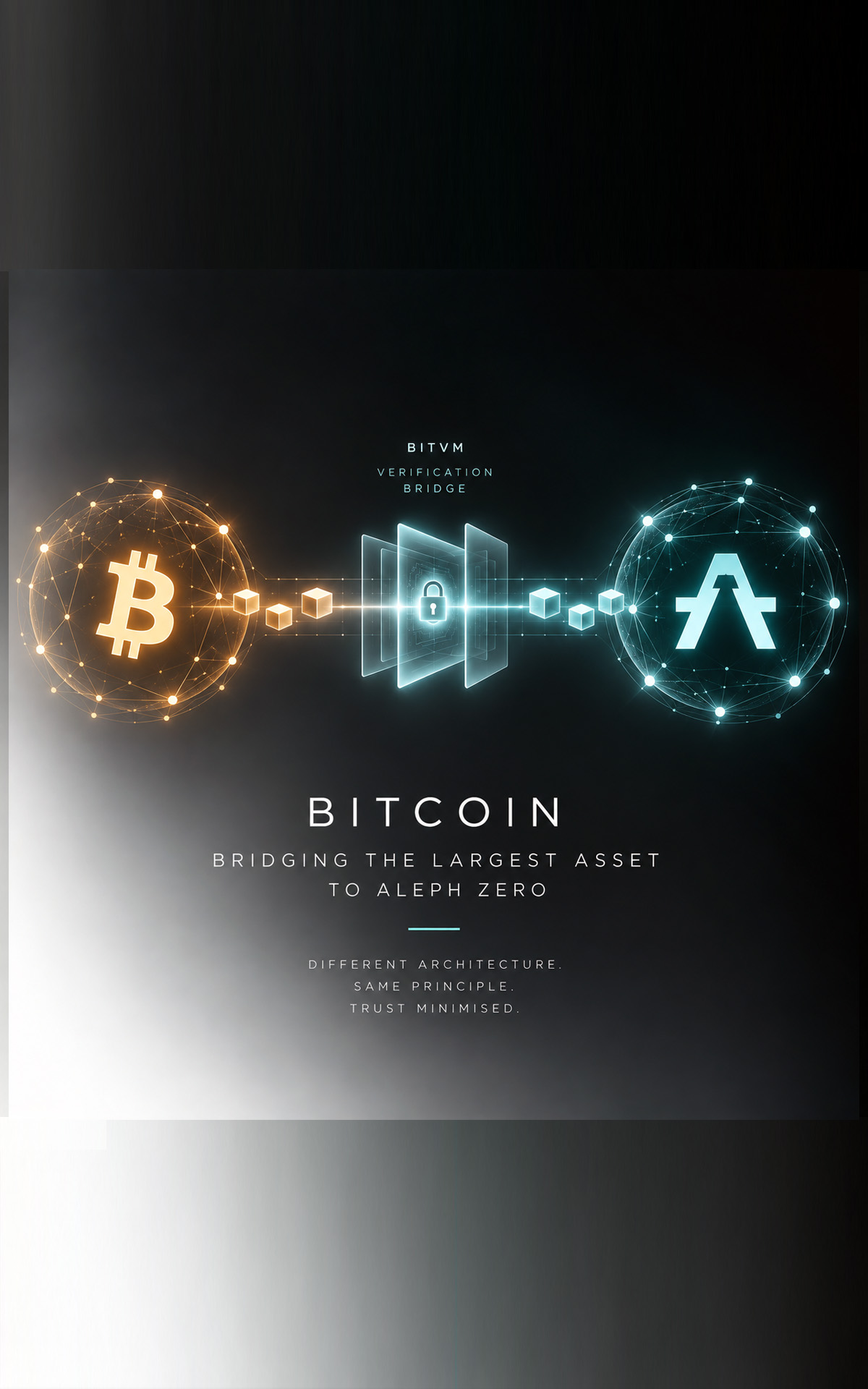
BitVM bridge between Bitcoin and Aleph Zero
Exploring

Bitcoin gets its own route into Aleph Zero.

Bitcoin needs a different bridge design because it does not operate like a programmable smart-contract chain.

Aleph Zero therefore explores BitVM for moving BTC between Bitcoin and Aleph Zero.
If implemented, this would give Bitcoin users a route into the same Aleph Zero exchange environment reached by assets from other connected networks.
BTC in and outThe roadmap specifically describes BitVM as a way to peg bitcoin into Aleph Zero and redeem it back on the Bitcoin network.
One exchange destinationBridged BTC could reach the same Aleph Zero DEX used by assets arriving through other supported bridges.
A wider Bitcoin familyThe roadmap also notes that a completed Bitcoin bridge could open a path for assets from other chains based on bitcoin-core.
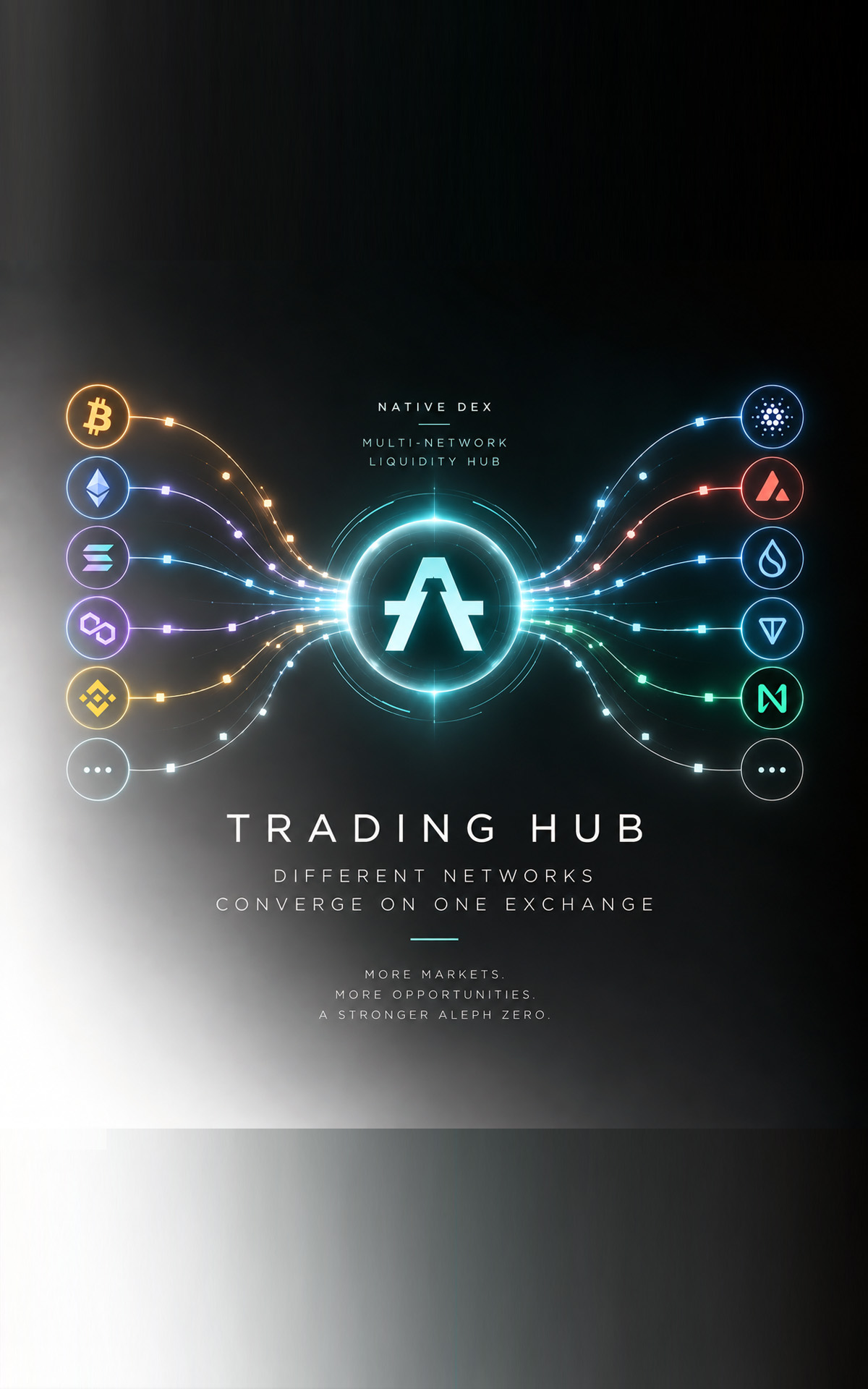
Aleph Zero multi-network trading hub
Architecture

Different networks converge on one exchange.

This is where the pieces converge.
Ethereum and other programmable chains can connect through the proposed ZKBridge architecture.
Bitcoin can connect through the proposed BitVM route.

Aleph Zero’s native DEX can then provide the common trading venue for those connected assets, with trades executed and settled on Aleph Zero L1.
Bridges bring the assetsEach supported bridge creates a route between another blockchain and Aleph Zero.
The DEX brings them togetherTrading pairs can be created between assets that reach Aleph Zero, subject to implementation and available liquidity.
Aleph Zero becomes the junctionIf the bridges, DEX and liquidity are delivered, Aleph Zero can connect otherwise separate blockchain markets through one exchange environment.
Aleph Zero performance, ordering and finality
Foundation

Why build the exchange on Aleph Zero?

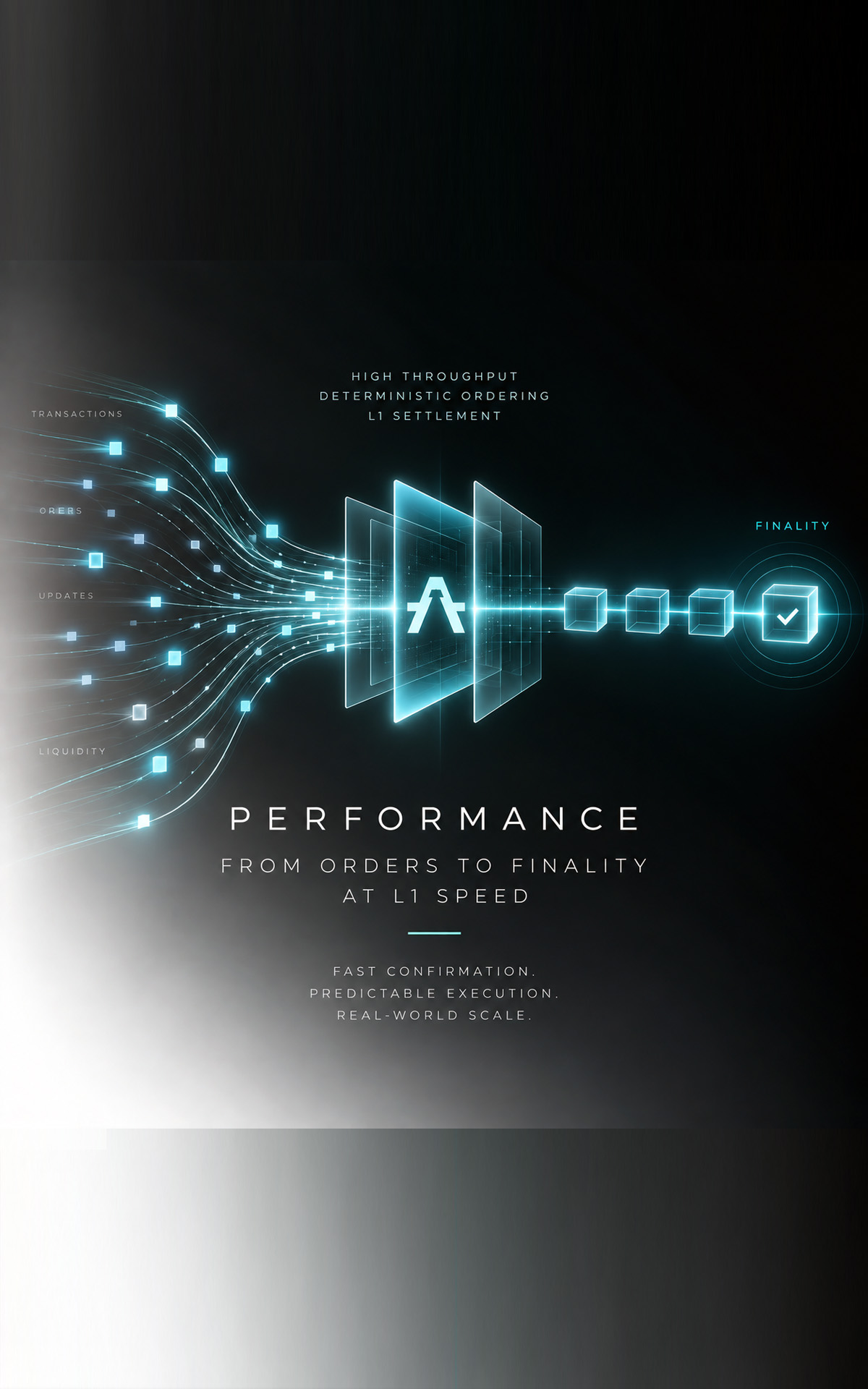
An exchange continuously receives orders, matches trades and changes balances.
That activity benefits from a network that can agree on transaction order quickly and make completed trades final.

AlephBFT gives the DEX Aleph Zero’s existing consensus and finality as its settlement foundation.
Order mattersWhen competing orders arrive, the network needs one definitive history of what happened and in what sequence.
Finality mattersOnce a trade is finalized, participants can treat that settlement as complete without waiting for additional confirmation depth.
The L1 does the settlementThe DEX turns Aleph Zero’s speed and finality into infrastructure used directly by market activity.
Aleph Zero DEX liquidity and order-book depth
Decisive

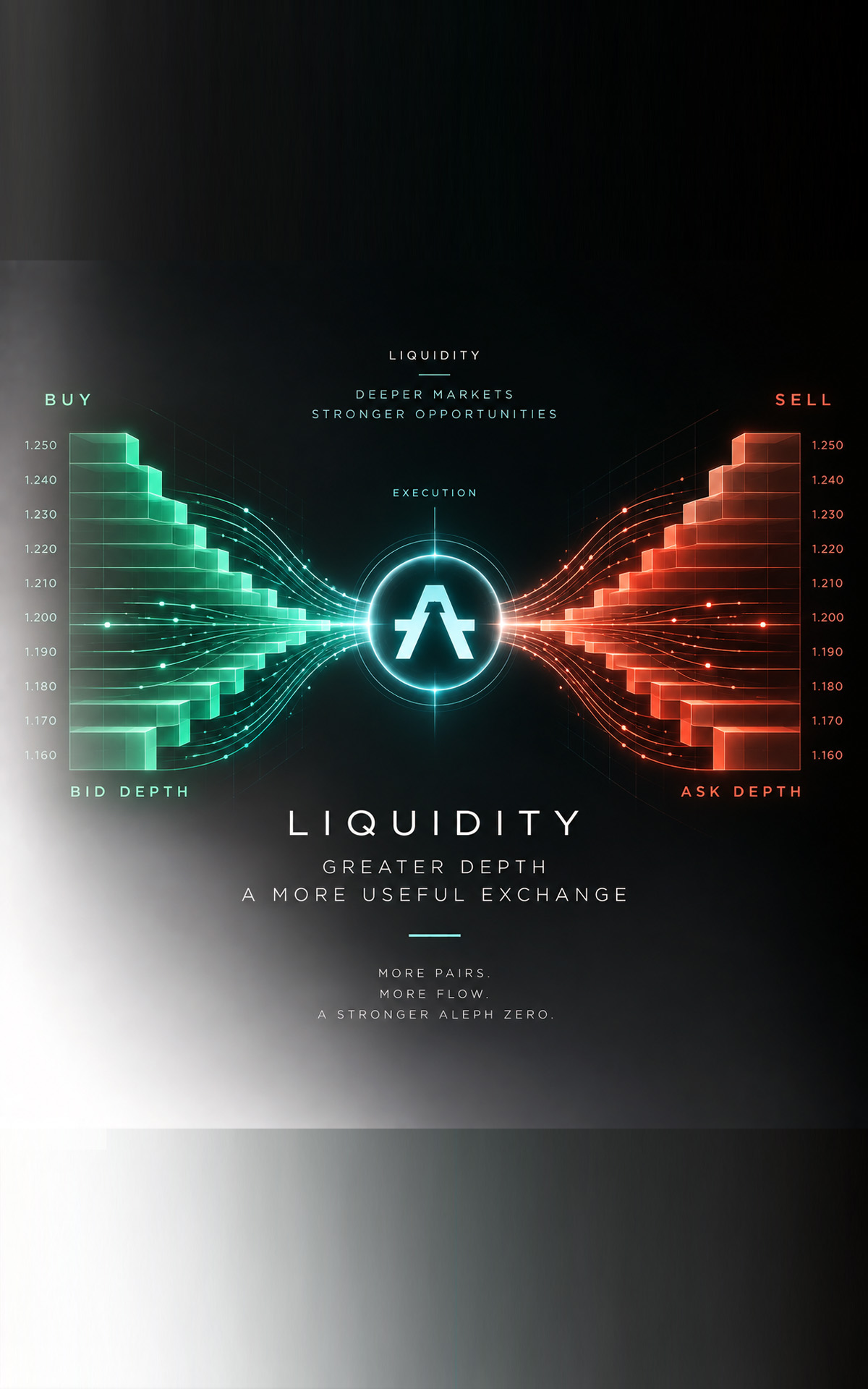
Connectivity creates the opportunity. Liquidity makes it useful.

Bridges can give the DEX access to assets from several blockchain ecosystems.
A trading venue becomes useful when people actually trade there.

Deep order books, competitive prices and sustained activity will determine whether the architecture develops into a real cross-chain market hub.

More networks expand the opportunityEvery useful bridge can add assets, users and potential trading pairs to the exchange.
More markets can reinforce the hubActive markets give users another reason to bring assets through the connected bridges.
Liquidity remains the critical testThe roadmap supplies the architecture.
Market makers, traders, applications and users ultimately determine whether the order books become liquid.
The strategic opportunity

Connect networks. Bring assets. Concentrate trading.

The proposed architecture gives each component a clear role: ZKBridge connects programmable chains; BitVM provides a route for Bitcoin; the native limit-order-book DEX provides the trading venue; and Aleph Zero provides the Layer 1 on which those trades settle.
If the bridges, exchange and liquidity are delivered, Aleph Zero could develop into an interoperable trading hub connecting markets across blockchain ecosystems.

Aleph Zero

Native.
Interoperable.
Market-Connected.

A Layer 1 with its own limit-order-book DEX, connected through purpose-built bridges to assets and users across other blockchain networks.

Independent community presentation. EV 0X is not operated by or affiliated with the Aleph Zero Foundation. Roadmap items are presented as planned or exploratory where applicable.